A place of whitewashed houses and rooftop terraces, fishermen returning with the morning catch, cobbled streets leading nowhere and everywhere, cafés filled with local conversation and boats disappearing across the lagoon towards seemingly endless stretches of sand.
Set on the shores of the Ria Formosa Natural Park, Olhão remains one of the Algarve's most characterful coastal towns. It is a place that has retained its identity as a working fishing town while quietly becoming one of the most interesting destinations in southern Portugal.And from Casa das Lendas, much of it begins right outside your door.
The historic centre of Olhão is best discovered without a plan. Step outside Casa das Lendas and wander through Bairro da Barreta, one of the oldest parts of town. Narrow lanes twist between whitewashed houses, tiny squares appear unexpectedly and staircases lead towards the distinctive rooftop terraces known locally as açoteias.
Seen from above, these flat-roofed houses create the extraordinary collection of cubes and terraces for which Olhão has become known. Portugal's official tourism information describes this roofscape as one of the defining characteristics of the town. Some houses have been beautifully restored; others still carry the marks of generations of fishermen and families who lived here before them. That contrast is part of Olhão's charm.

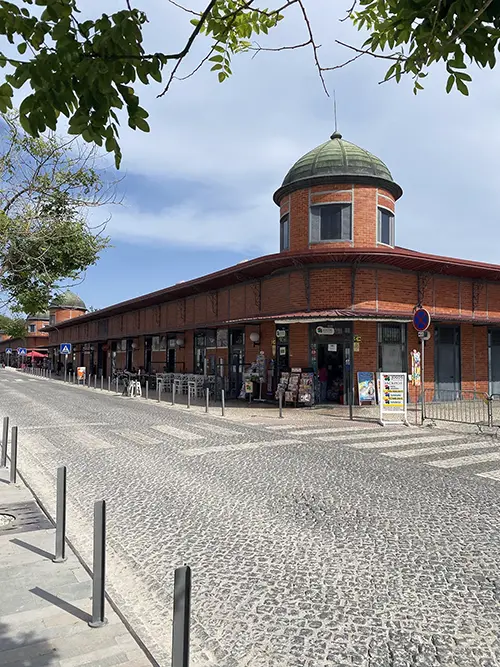
Walk towards the waterfront and you will soon encounter one of Olhão's great landmarks: its distinctive red-brick municipal markets.
Inside, fish and seafood arrive fresh from the Atlantic and Ria Formosa, while fruit, vegetables and regional produce fill the neighbouring market building. The markets remain an important part of everyday life in Olhão rather than simply being a visitor attraction.
Saturday morning is particularly lively, when additional stalls appear outside along the waterfront. Buy something for lunch, stop for coffee, watch the boats and simply enjoy the atmosphere.

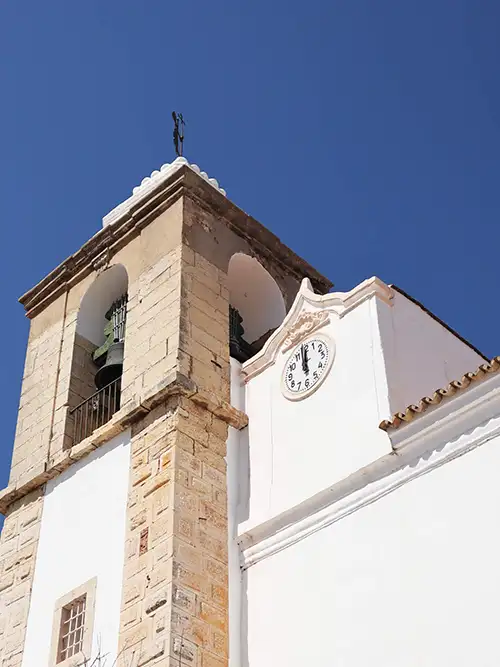
Standing proudly on Praça da Restauração, the Igreja Matriz de Nossa Senhora do Rosário tells an important part of Olhão's story.
Built between 1698 and 1715, it was the town's first stone building — remarkably, financed with contributions from the local fishermen at a time when Olhão was still little more than a settlement of modest houses and fishermen's huts.
Inside, the simplicity of the white architecture contrasts beautifully with gilded Baroque woodwork, an old image of Nossa Senhora do Rosário and religious works dating from the 17th and 18th centuries.
Perhaps the most beautiful detail, however, is the story written into the church itself. An inscription on its façade recalls that the temple was built at the expense of the men of the sea, on a spot where once there had been little more than simple huts.

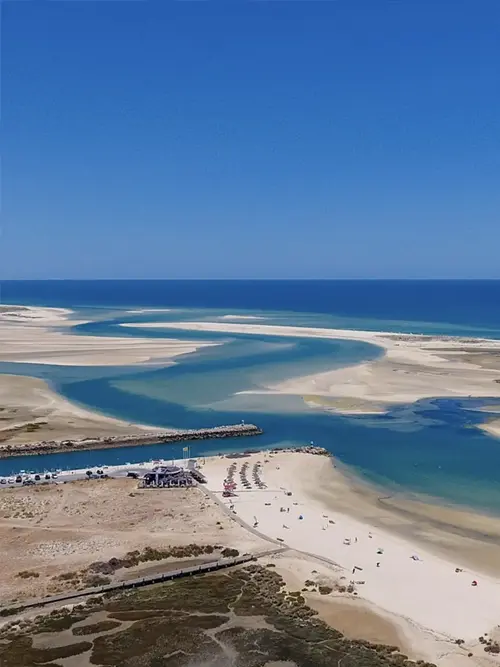
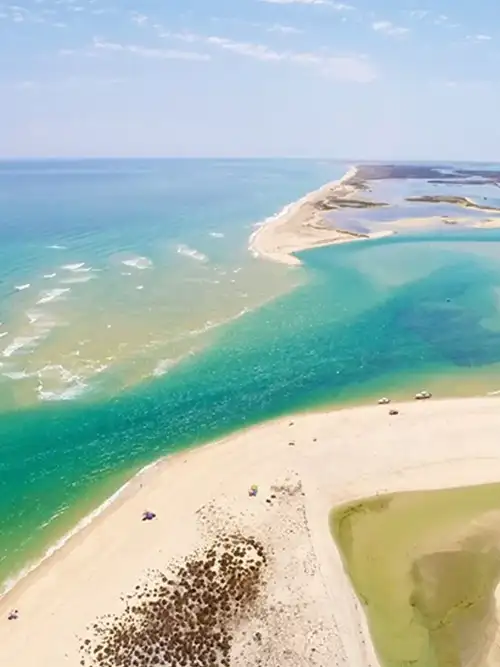
Olhão looks out across the Ria Formosa, an extraordinary protected lagoon system stretching for around...
... the Eastern Algarve. Barrier islands, salt marshes, tidal channels and sandbanks create an ever-changing landscape between mainland Portugal and the Atlantic Ocean.
The area is protected as the Ria Formosa Natural Park and provides an important habitat for an exceptional variety of wildlife. Ria Formosa is also simply a wonderful place to spend a day. Take a small boat through the channels, kayak across the lagoon, watch the birds or find a quiet place for lunch overlooking the water.

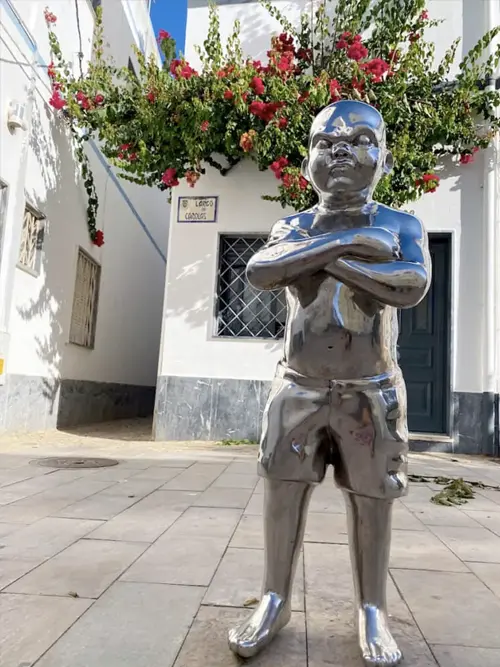
Olhão isn't only a town of fishermen and markets. It is also a town of stories. The Caminho das Lendas — Path of Legends —.
That leads through the historic streets of Olhão, connecting places associated with traditional local legends. Sculptures and installations along the route bring these stories to life. For guests of Casa das Lendas, there is a particularly special connection.
The house stands on Rua do Gaibéu, beside one of the locations associated with the Path of Legends. One of those legends begins almost outside your door.

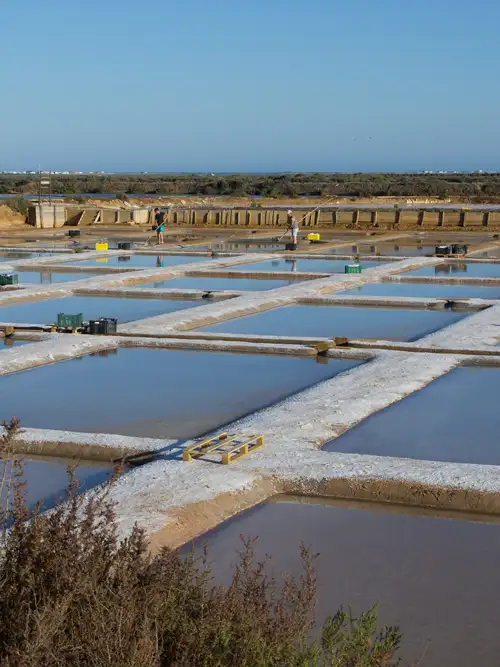
Just outside Olhão, the traditional salt pans reveal another side of the Algarve. Sea salt and delicate flor de sal are still harvested here using methods shaped by centuries of tradition.
At Salinas do Grelha, visitors can discover how the salt is produced and, during the appropriate season, experience the extraordinary sensation of floating almost weightlessly in highly concentrated salt water — often compared to bathing in the Dead Sea.
Surrounded by salt pans, open skies and the landscape of the Ria Formosa, it is an unusual and wonderfully relaxing experience.

Olhão is a town that loves to eat. Its fishing heritage is still very much alive, with fresh fish, clams, oysters, octopus and seafood arriving daily from the Atlantic and the Ria Formosa.
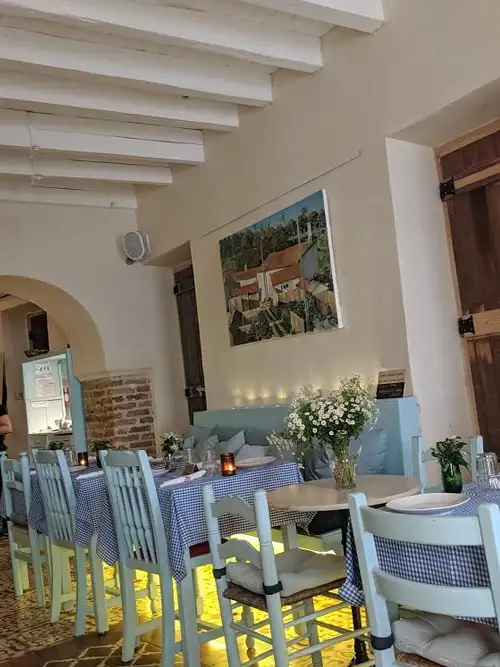
Around the markets and throughout the old town, you'll find everything from simple Portuguese tascas and charcoal-grilled fish to creative contemporary restaurants and intimate wine bars.
New places continue to appear, but some of the greatest pleasures remain wonderfully simple: fresh fish, a cold glass of Portuguese wine and a table outside on a warm evening.
We have collected some of our favourite restaurants in Olhão to help you discover them.

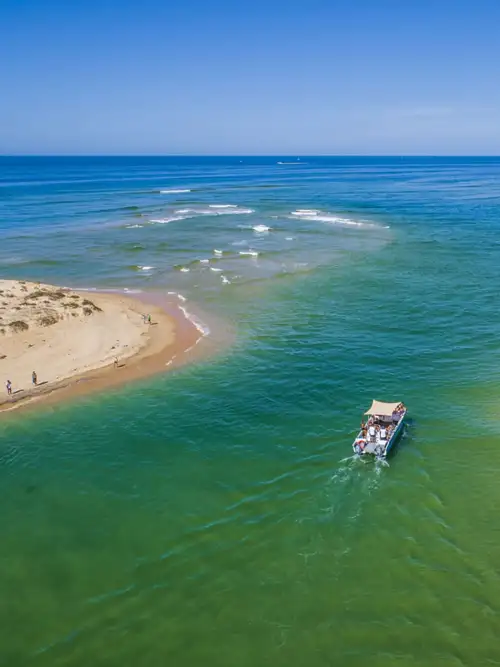
One of the best ways to understand the Ria Formosa is from the water. Boats leave from Olhão and make their way through the lagoon's winding channels ...
... passing salt marshes, shellfish beds and small fishing communities before reaching the barrier islands and their seemingly endless beaches. Tours range from shorter trips to longer excursions with stops on islands such as Culatra, Armona and Farol.
Every journey is slightly different as the tides constantly change the landscape. Choose a traditional boat, a small private tour or perhaps a sunset trip — then sit back and watch Olhão slowly disappear behind you.

Just east of Olhão lies Fuseta, a small fishing village surrounded by the waters, salt pans and islands of the Ria Formosa. Fuseta offers two very different beach experiences.
The lagoon-side beach is easily reached from the village and has calm, shallow water, while a short boat journey takes you across to the beautiful Atlantic beach on the barrier island.
The village itself is worth exploring too. Fishing boats line the waterfront, fresh fish is grilled in local restaurants, and the surrounding salt pans are excellent places for spotting birdlife, including flamingos at certain times of the year. Ria Formosa
The era of smuggling has passed, the huts have been replaced by masonry constructions, but the irregularity remains. The new constructions occupied exactly the same space that the huts previously occupied, thus giving rise to a unique neighborhood in the entire Algarve. Walking around here is like navigating a labyrinth where one easily gets lost and found.
Today, Largo do Gaibéu forms part of Olhão's Caminho das Lendas — the Path of Legends, a route through the old town connecting five traditional stories with the places where they are said to have happened. And this is what makes the name Casa das Lendas — House of Legends so special. Our house is situated on Rua do Gaibéu, right in this historic part of Olhão, where one of the town's best-known legends has been passed from generation to generation. When you stay at Casa das Lendas, the legends of old Olhão are not simply something you read about. One of them begins just outside your door.